Anyone who’s ever been through the unpleasant experience of appendicitis would ask why we needed an appendix in the first place.
The same goes for wisdom teeth and tonsils. But did you know there are even more body parts that we still have, yet no longer need?
Humans have undergone thousands of years of evolution – and during this process, dramatic changes took place to help us adapt to and survive changing conditions.
This means that some body parts, which served a purpose way back, are now obsolete.
These are "vestigial" body parts or organs, meaning that they have been changed or adapted in a process called vestigiality. Vestigiality is the retention of certain functions that were needed by earlier humans. Here are seven examples:
1. Darwin’s tubercle – the top skin fold on the ear
This term is used to describe the thickened fold of cartilage and skin at the top of the ear present in 10% of people.
The function of this thickened ear fold is unclear, but some researchers say that it might have been a joint that could allow the ear to flop down or swivel to enable prehistoric humans to hear better and protect themselves in the wild. Nowadays we no longer need the amplified hearing that was so crucial for our prehistoric forefathers.
2. Plica semilunaris – the third eyelid
If you look at your eye, this is the little pink triangle close to your nose. This triangle consists of two parts – the lacrimal caruncle (a piece of skin that covers sebaceous and sweat glands) and the plica semilunaris (what is left of the third eyelid).
A third eyelid or nictitating membrane is rare in mammals, but commonly found in bird and reptile species. Its function is to protect and moisten the eye while allowing uninterrupted vision. In some species it's transparent to allow vision under water.
3. Coccyx – the tailbone
The coccyx (tailbone) is a triangular bone formation at the bottom of the spine. It is a vessel for where a tail should have been. Throughout the ages humans have evolved to become tailless, since it was no longer needed in the wild. Although we no longer have a tail, the coccyx still serves as a crucial attachment for several tendons, muscles and ligaments.
4. Male nipples
The only reason males have nipples is because for the first 60 days in the womb, males and females develop exactly the same way. It is only after 60 days that the chromosomes determine which sex organs will develop. Male nipples were possibly never eradicated by natural selection because they don’t do any harm.
5. Arrector pili – goosebumps
Ever wondered why you feel the hairs on your arms raise when you get a fright? Goosebumps do exactly that – they signal fear. These bumps on the skin are created by tiny muscles at the end of every hair follicle, called the arrector pili muscles. When we were still living in the wild and had more body hair, goosebumps made these hairs stand up straight to intimidate potential predators. (Have you ever seen a cat’s fur rise in anger or fear?)
In cold temperatures, it also helped our body hair puff up to keep us warm. As we progressed out of the wild, lost most of our body hair, started to build more sophisticated houses and layer ourselves with clothes, this function became obsolete.
6. Jacobson’s organ – the vomeronasal organ
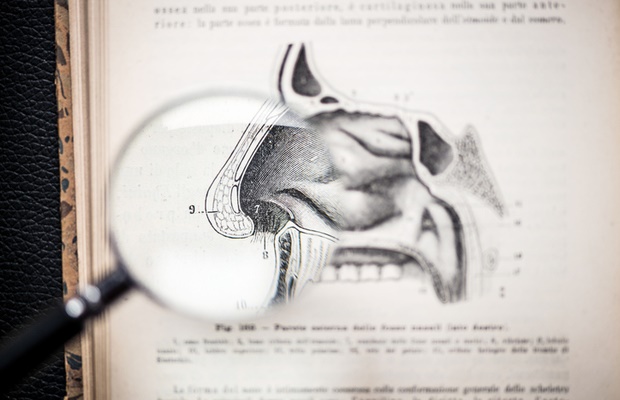
The vomeronasal organ (VNO) is an smelling organ organ found in animals and humans. This organ is found at the base of the nasal septum or the roof of the mouth and is used to detect pheromones, a chemical substance released by animals into the environment, affecting the behaviour of other animals around them.
It has been disputed for long whether humans actually use their VNO to detect pheromones, since humans, unlike animals, are able to communicate with language instead of having to rely on chemical cues. Research has found that the genes that code the receptors of the VNO in humans are nonfunctional – which means that we do not use this organ at all.
7. Plantaris muscle – the 'monkey' muscle
The plantaris muscle is located at the bottom of the foot. In animals, this stringy muscle helps them grip and enables them to climb trees. In humans, the muscle is weak and pretty much useless. So useless in fact, that doctors often remove them when tissue for reconstruction is needed in other parts of the body. This muscle is now so redundant that 9% of humans are born without it.
Written by: Marelize Wilke
Fuente: www.health24.com