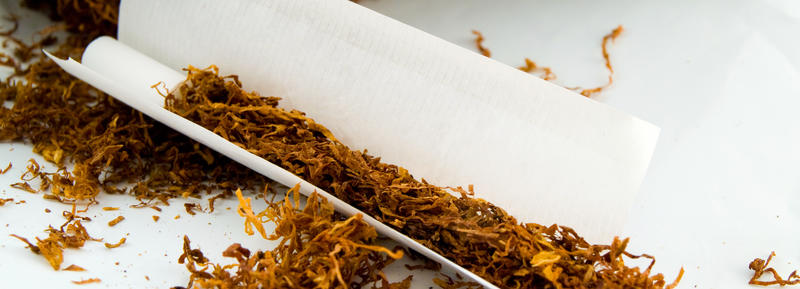
"Medicinal tobacco was first used in the New World by the indigenous peoples and later, after tobacco was brought back by explorers, in the Old World where it was incorporated into a wide array of European herbals and pharmacopoeias. More recent research suggests that nicotine may treat symptoms of Alzheimer's disease and Parkinson's disease.
Tobacco is cultivated from leaves of two species: Nicotiana tabacum, which is of South American origin, and Nicotiana rustica, which comes from North America.
Both types of tobacco were spread throughout the world, and it is unclear which species of tobacco first made it to Europe.
Tobacco is made up of 19 chemicals that can cause cancer. These 19 chemicals are known as tar. Nicotine is one chemical found in tobacco, and is highly addictive when smoked as a component of tobacco. However on its own, nicotine is less addictive and may proffer some medicinal benefit.
Once nicotine gains access to your blood by either inhalation (lungs), nicotine gum (intestines) or skin or mucus membranes, it binds to nicotinic acetylcholine receptors in not only the brain (central nervous system) but also at the neuromuscular junctions (peripheral nervous system), where muscle meets nerve.
In nontoxic dosages, nicotine is a stimulant (caffeine is another stimulant) that heightens attention and alertness; raises heart rate, respiration and blood pressure; and increases movement.
The cognitive effect occurs because in the brain, nicotine increases the release of neurotransmitters like serotonin, dopamine and acetylcholine. Whereas in the body, nicotine hits the neuromuscular junctions.
While visiting the New World, Columbus first noted the use of tobacco as a healthful agent, and in Cuba two of his men witnessed native peoples use a tobacco torch to ward off disease and exhaustion.
Columbus even speculated that tobacco served as an anesthetic during trepanning operations, where holes were drilled into the skull.
By 1500, explorers began to fully realize the potential of tobacco--often mixed with chalk or some other substance--as a panacea. Some of the many early uses among pre-Colombian peoples included the direct application of tobacco to ulcers, sores and fistulas (tunnels in the body) as well as treatment of cold, headache, and yaws. Around the same time, natives of Mexico used tobacco as an antidiarrheal, emollient and narcotic.
Tobacco was met with much excitement when it was introduced to Europe. Physicians and apothecaries alike were quick to treat tobacco as any other herb and include it in a variety of products which treated general body ills, sores, ulcers, fevers, colds, thirst, hunger as well as in narcotics and purgatives. Much like in the Americas, in Europe, tobacco was used for everything from from hemorrhoids to hysteria. Interestingly, tobacco smoke was also blown up a patient's rectum to treat strangulated hernia, strychnine poisoning, constipation, hydrophobia, tetanus or worms.
In 1828, scientists first isolated the main active ingredient in tobacco, the "dangerous" alkaloid nicotine. By this time, some physicians had already grown disillusioned with the use of tobacco as medicine. Other people started to use nicotine alone instead of straight tobacco. For instance, a 0.1 percent nicotine salve was used to treat scabies.
In 1926, 13 patients with post-encephalitic parkinsonism were injected with nicotine. Many experienced immediate improvement in muscular function. More recent research suggests that smoking may have a protective effect against not only Parkinson's disease but also Alzheimer's disease. Currently, researchers are examining whether nicotine can improve the symptoms of these diseases, too. In other words, it's possible that nicotine supplementation may help people with Parkinson's disease or Alzheimer's disease.
On a final note, the only routine use of nicotine supplementation is to help with smoking cessation. However, it's unclear whether nicotine gums, patches or inhalers actually help smokers quit or increase relapse rates".
Fuente: www.verywell.com