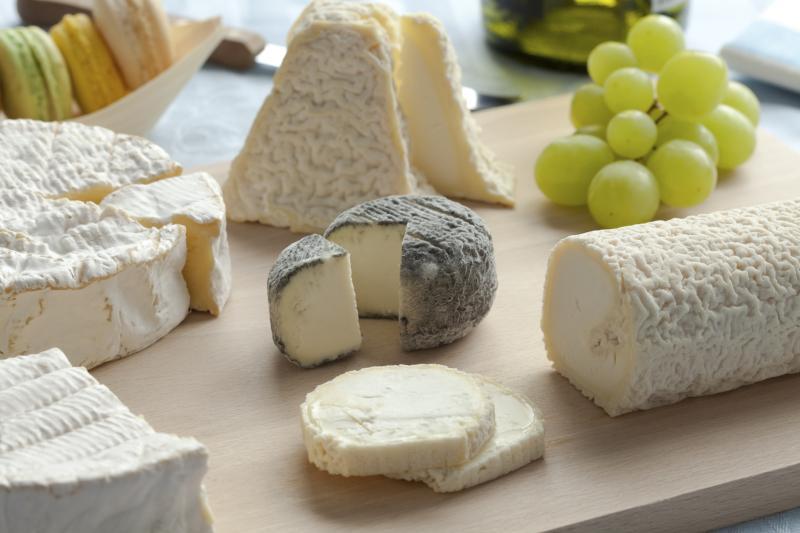
The amount of cheese Americans eat each year has almost tripled since the 1970s, which comes out to about 30 pounds a year on average, according to the Center for Science in the Public Interest. A good source of protein, calcium and phosphorus, cheese can certainly be considered a nutritious food. That doesn't give you license to eat as much cheese as you want, however, because it also contains saturated fat and sodium, which aren't good for you. In fact, eating too much cheese can do more harm than good.
Scary Saturated Fat
One of the primary drawbacks of cheese is that it contains saturated fat. A diet too high in saturated fat can cause your cholesterol levels to become elevated. High cholesterol raises your risk of life-threatening health problems such as heart attack and stroke. Keeping your saturated fat intake to 10 percent or less of your total caloric intake can help keep heart disease at bay, according to the Centers for Disease Control and Prevention. That's 22 grams or less per day if you follow a 2,000-calorie diet. An ounce of cheddar cheese contains about 6 grams of saturated fat, and the same amount of mozzarella has 3.7 grams. Parmesan cheese contains almost 1 gram of saturated fat per tablespoon.
Cholesterol Is a Drawback, Too
Monitoring your intake of cholesterol can help you keep your cholesterol levels within the normal range. Eating large amounts of cholesterol can lead to cholesterol buildup in your arteries, which raises your risk of stroke. Healthy adults should limit themselves to 300 milligrams of cholesterol or less, and those who already have high cholesterol shouldn't consume more than 200 milligrams per day, according to the American Heart Association. An ounce of cheddar cheese contains 30 milligrams of cholesterol, and an ounce of mozzarella has 22 milligrams. One tablespoon of Parmesan cheese contains 4 milligrams.
Sodium Stats
Cheese contains a large amount of sodium, and too much of the salty stuff isn't good for your heart. A diet high in sodium can cause your blood pressure to increase, and when that happens, it leaves you susceptible to heart attack and stroke, according to the American Heart Association. Too much sodium might also raise your risk of kidney disease and osteoporosis. An ounce of cheddar cheese has 176 milligrams of sodium, which is 12 percent of the 1,500 milligrams you should limit yourself to each day. A 1-ounce serving of mozzarella contains 178 milligrams of sodium, and a tablespoon of Parmesan has 85 milligrams.
Fitting Cheese into a Healthy Diet
Eating an ounce of cheese is one way to increase your intake of protein and calcium, but it's best to limit how much you eat to no more than 2 ounces a week, according to the Center for Science in the Public Interest. If you simply cannot reduce your intake of cheese, look for reduced-fat versions, which are lower in saturated fat; keep in mind that they still contain similar amounts of sodium compared to traditional cheese. Eating your pizza or pasta with half the cheese or having a burger or sandwich without cheese are additional ways to cut your intake.
Fuente: www.livestrong.com
WARNING: Puyol Mos made this note and was not rated by users as credible.