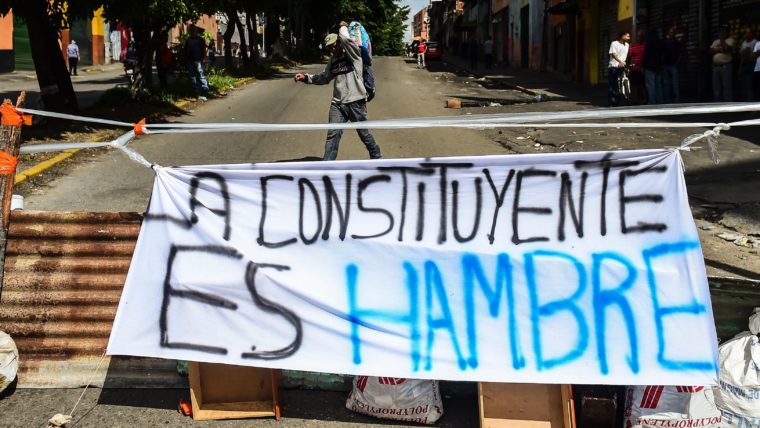
Venezuela is a country north of South America, which has the largest reserves of oil in the entire region and one of the best in the world, is living, according to millions of complaints by traditional means and social networks, a humanitarian crisis Quite serious: no medical supplies, basic products and food, in addition to violence unleashed in its territory.
The government's administration since the late President Hugo Chávez has unleashed an unthinkable disorder and division in the tropical country and is in the door an election without popular consultation to seek to change its constitution to what many of its citizens are against.
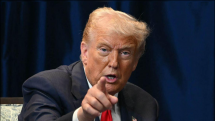
That's why the Trump administration plans to sanction 13 Venezuelans tied to the government of President Nicolás Maduro on Wednesday, four days before the South American nation plans to hold a vote that the U.S. says will turn Maduro’s rule into a dictatorship.
The U.S. will freeze assets and ban travel visas for the 13 individuals, who are high-ranking current or former leaders of the government, military and state oil producer, in an attempt to continue punishing Maduro loyalists for undemocratic actions.
Eight of the names will coincide with a list of 10 Venezuelans that U.S. Sens. Marco Rubio, R-Fla., and Bob Menendez, D-N.J., sent President Donald Trump on Tuesday suggesting possible sanction targets.
The five new names are: Elías Jaua, who served vice president from 2010-12 and as foreign affairs minister from 2013-14; Néstor Reverol, minister for interior relations and justice; Alejandro Fleming, who served as vice-minister for North America and Europe from 2015-16; Sergio Rivero Marcano, commander general of the Bolivarian National Guard; and Franklin García Duque, director of the Bolivarian National Police.
The other eight Venezuelans to be sanctioned are: Tibisay Lucena, president of Venezuela’s National Electoral Council; Carlos Erick Malpica Flores, national treasurer; Iris Varela, minister of Venezuela’s correctional system; Tarek William Saab, ombudsman; Jesús Suárez Chourio, commander of the Bolivarian Army; Carlos Alfredo Pérez Ampueda, director of the Bolivarian National Police; Simón Zerpa, vice president of finance of state oil producer PDVSA; and Rocco Albisini, president of the national center for foreign trade, known as CENCOEX.
Fuente: wlrn.org