Upi: Is God dead? Fifty years ago, on April 8, 1966, a Time magazine cover asked just that question.
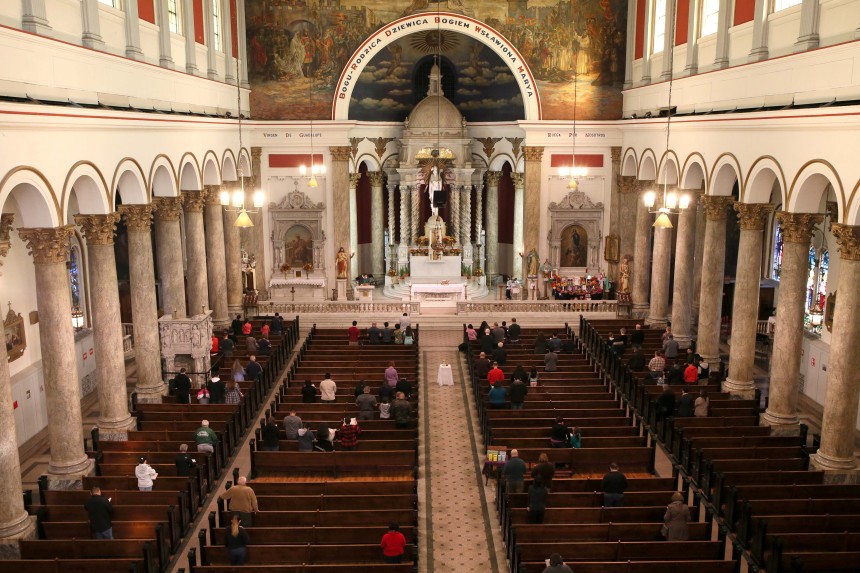
The same could be asked in Britain today. The Church of England recently announced it was considering dropping the requirement for weekly church services in parish churches in the wake of dwindling attendance that shows no sign of bouncing back for at least a generation. Low church attendance is frequently in the news, but looking deeper into the phenomenon reveals what the underlying issues really are.
The Church of England has been suffering from a conflict of values with its members, especially the under 25s. Recent debates around same-sex marriage, abortion and female bishops, have threatened to split the church and alienate a significant proportion of its congregation. Throughout ongoing controversies, including the lack of support for policies on women, the Church of England has come across as outdated.
The situation has been exacerbated by the comments of senior church figures such as the Archbishop of Canterbury, Justin Welby, who lamented earlier this year that"the culture [is] becoming anti-Christian, whether it is on matters of sexual morality, or the care for people at the beginning or end of life. It is easy to paint a very gloomy picture."
At the same time, the Church of England – as well as the Catholic Church – is still reeling from allegations and legal settlements related to accusations of sexual abuse. Indeed, many have abandoned Catholicism as a result of what many perceive to be the church's inadequate response to that systemic problem.
God is no longer 'in our image'
As Church of England congregations age and young people reject organized religion, the atrophy of traditional parish churches seems to be unremitting.
In contrast, attendance at Evangelical and Pentecostal churches has increased over the last several decades. Between 2015 and 2013, attendance in London Pentecostal churches increased by 50 percent. This is at odds with Church of England attendance, which has gone down by 9 percent over the same period. While many Anglican churches have made an effort to welcome new immigrants and support refugees, the message has not been unequivocally supportive; evangelical churches are more highly regarded by Christians who have recently arrived in the UK.
Prominent Conservative Party leaders, including Theresa May and David Cameron, and most recently, the aptly named Tory councillor Christian Holliday, whose policies have been criticized as not welcoming of new arrivals to the UK, are perhaps some of the more visible representatives of traditional churchgoers. In contrast, the rise of charismatic church attendance by recent arrivals to the UK illustrates that these communities offer something the Church of England does not.
While the demographics of church attendance have shifted over the past few decades, as indeed they have since Christianity first emerged as a religion in its own right, interest in religion itself has increased sharply. For instance, religion is the fastest-growing A-level subject in all of the humanities, social sciences and arts, increasing a whopping 110 percent since 2003.
This is despite growing anxiety about how to teach religion in schools, some of which has resulted in backward curriculum redesign or ineffective teaching that may be discouraging students from learning more about the subject.
Fuente: www.upi.com