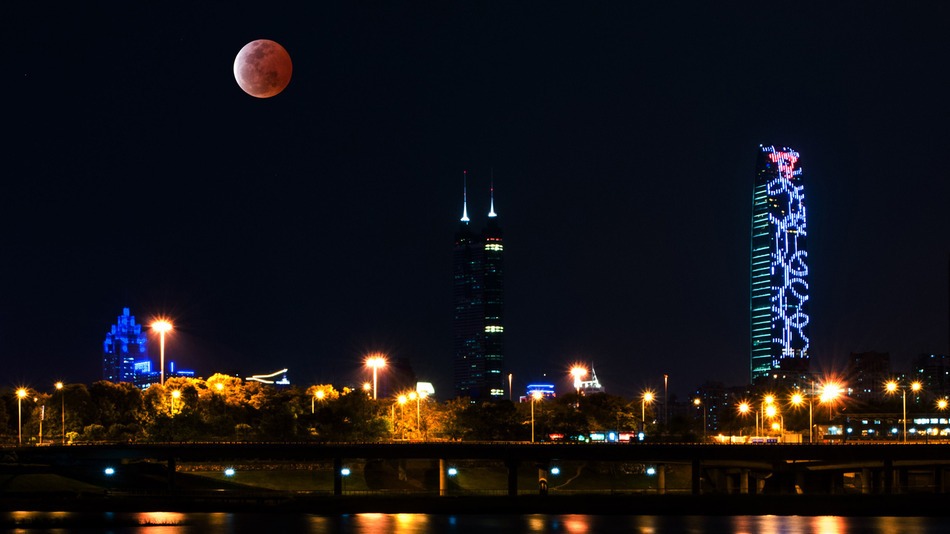
Get ready. A very special, very rare moon is rising this weekend.
On Sunday, the full moon will be at its closest point to Earth in its monthly orbit while it also goes through a total lunar eclipse. This kind of "supermoon" total eclipse hasn't happened since 1982, and it won't occur again until 2033.
If you happen to be in North or South America, Europe or Africa, you'll probably have a great view of the total eclipse that should turn the moon a red color during totality, which is scheduled to begin at 10:11 p.m. ET. Anyone with a dark sky and clear weather at that time should be able to see the eclipse.
The partial phase of the eclipse should start at about 8:11 p.m. ET Sunday, with totality lasting about 1 hour and 11 minutes, peaking at 10:47 p.m. ET.
"Throughout human history, lunar eclipses have been viewed with awe and sometimes fear," NASA said in a statement. "Today, we know that a total lunar eclipse happens when the full moon passes through the darkest part of Earth's shadow, the umbra."
During a total lunar eclipse, the moon doesn't actually go dark. Instead, it can glow with a somewhat eerie red color because of the way sunlight shines through Earth's atmosphere and onto the moon.
The full moon on Sunday will also look somewhat larger than usual. The diameter of the moon will be about 14% larger in diameter during the supermoon when compared to what it looks like when the moon is at its farthest point from Earth.
The supermoon will also be about 30% brighter, NASA said.
Scientists will use the lunar eclipse to actually take some special measurements of the moon. NASA's Lunar Reconnaissance Orbiter will take the moon's surface temperature as it is plunged into darkness to learn more about the structure of the moon and its composition.
Engineers working with the Lunar Reconnaissance Orbiter are also taking measures to protect the solar-powered spacecraft during the eclipse.
“We have a method and it works well,” operations planner Dawn Myers said in a NASA statement. “It’s always stressful during the approach of the eclipse, but we follow the same procedures every time and we haven’t had any trouble.”
Fuente: mashable.com