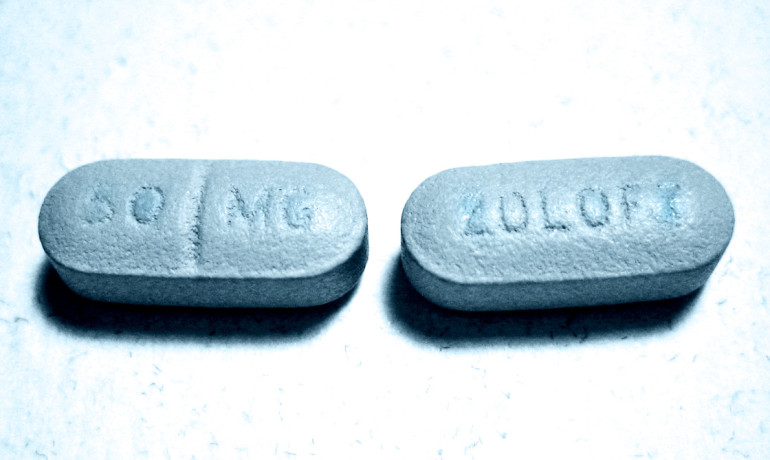
When treated with the prescription drugs Zoloft and Vascor, mice infected with Ebola survived.
The new study was small and preliminary, but if the drugs prove effective in humans—a finding still years away—it could mean new treatments for the deadly disease.
When researchers treated 10 mice infected with Ebola with Vascor (bepridil), customarily used to control blood pressure in heart patients, all the mice survived the often-deadly virus. When 10 mice were treated with the antidepressant Zoloft (sertraline), seven survived.The next step, will be to test the drugs in guinea pigs and monkeys, says immunologist Gene Olinger.
Olinger is associate director for maximum containment training at Boston University’s National Emerging Infectious Diseases Laboratory (NEIDL) and an adjunct associate professor of infectious diseases. The drug analysis was done at his lab in Maryland, where he works as a contractor with the National Institutes of Health. NEIDL is awaiting approval for Biosafety Level 4 research, which would include on-site, live-virus Ebola studies.
‘DO SOMETHING QUICKLY’
Ebola has killed more than 11,000 Africans in an ongoing outbreak that began in December 2013. Olinger’s work with Ebola and other viral hemorrhagic fevers (VHF) began in 2004, when he was a civilian employee with the Army.
“We started to develop a drug screen using a live virus” that might find effective therapies, Olinger says. Given the time and expense—and failure rate—of developing new drugs, “I was tasked to find a way to do something quickly.”
Olinger says he thought it made sense to screen existing Food and Drug Administration–approved drugs, not just for the time saved, but because “the repurposing approach has been used in infectious diseases before.”
He cites two prominent examples: Viagra was originally a heart treatment drug before its effectiveness against erectile dysfunction was discovered, and thalidomide—used for nausea in pregnant women until it was found to cause birth defects—today is “a very good cancer drug.”
DRUG COCKTAIL
Researchers screened 2,600 drugs, representing 90 percent of the FDA-approved pharmaceutical library. Of those screened, 80, including antihistamines and treatments for breast cancer, heart disease, and depression, appeared to have some effectiveness against Ebola. The drugs were put in dishes along with cells infected with the disease, to see if the drugs might block the virus. Those that looked most effective were tested then in mice.
The effective drugs appear to work by damming up cellular pathways through which Ebola enters. “We do know there are synergistic combinations that are possible,” he says, meaning that an ultimate therapy might involve a cocktail of several drugs, similar to the way HIV is treated.
The findings, published in the journal Science Translational Medicine, even surprised Olinger.
“I was shocked at the breadth of the type of drugs that had an impact,” he says, such as drugs blocking estrogen receptors in the cells. “Why would a virus need an estrogen receptor? I could see years of research just on a basic level just off that one finding.”
Fuente: www.futurity.org