In a world fueled by consumerism, pollution is at an all-time high. One of the most commonly produced materials is plastic. Bottled waters alone account for up to 1.5 million tons of plastic waste per year, and although the high quality plastic used is ideal for recyclers, over 80 percent of these containers are simply thrown away. According to the Ocean Conservatory, plastic bottles are among the most prevalent sources of pollution found on beaches. The UN reported in 2006 that every square mile of the ocean has 46,000 pieces of plastic floating in it.
The Nature of Plastic Bottles
Plastic is a non-perishable material and goes through a different decomposition than most materials; plastics photodegrade. This means the materials break down to smaller fragments and readily absorb toxins which contaminate soil, waterways, and animals upon digestion. Refuse plastic absorbs pre-existing organic pollutants, including Bisphenol A (BPA) and polychlorinated biphenyls (PCBs) which cause health issues in mammals. In 2008, the EPA estimated 2,480,000 tons of plastic bottles and jars were disposed every year, and in 2010, worldwide water bottle sales were estimated between $50 and $100 billion. So what are we going to do with all this waste? We use it!
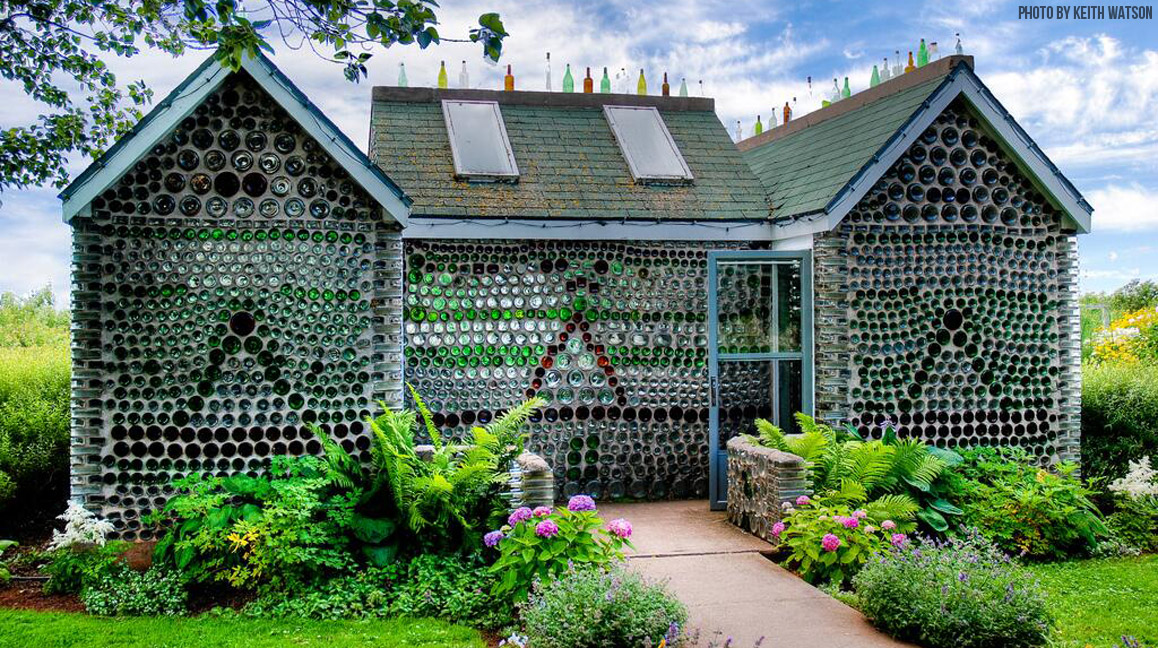
One man’s junk is another man’s treasure, at least for Eco-tec who uses recycled PET bottles to construct homes, schools, furniture, and bus stops within developing nations. As a solution to the 100 billion plus wasted plastic bottles a year, the award winning company from Honduras realized in 2000 they could use these bottles as building materials, and provide Hondurans with employment opportunities and infrastructure restoration.
Creating Sustainable Building Material
To create their first sustainable home in 2001, Eco-tec used 8,000 recycled PET bottles to build the casa ecologica. Casa ecologica became the model for construction from that point forward, and the process of turning these plastic bottles into durable building blocks became quite simple. After the bottles are collected from landfills and local recycling sites, they are filled with sand and sealed prior to construction. These bottles make up about 70 percent of construction materials, and act as replacements for bricks or wood. Additionally, each house is made with a “living roof” – meaning it is made with sod and turf, which not only insulates the house better than a conventional roof, but also provides the ability to grow a sustainable garden.
Since it’s inception, the concept of using water bottles as building materials has spread throughout the world. Now people all over South America, Africa, and Eastern Europe are taking the initiative to build their own homes. Alfredo Santa Cruz of Puerto Igauzu, a border town between Argentina and Brazil, used over 1540 recycled bottles, 1300 Tertra Pak cartons, and 140 CD cases to design and furnish his entire home and backyard. “Domestic waste can be transformed into useful stuff. We developed our own technique, which allows people to build a house that’s perfectly functional at a very low cost and with their own hands. This is not just a project, but a reality,” says Santa Cruz.
For all of the third world nations in need of basic building materials and for developing countries that need infrastructure refurbishing, using recycled PET bottles not only helps these countries to flourish, but also creates an economical, sustainable, and practical solution to the issue of global pollution.
To learn more about how recycling plastic bottles are used for construction, or to get involved in a project, please visit Eco-Tecnologica.
Fuente: millennialmagazine.com
WARNING: Virgnia T Sherl made this note and was not rated by users as credible.