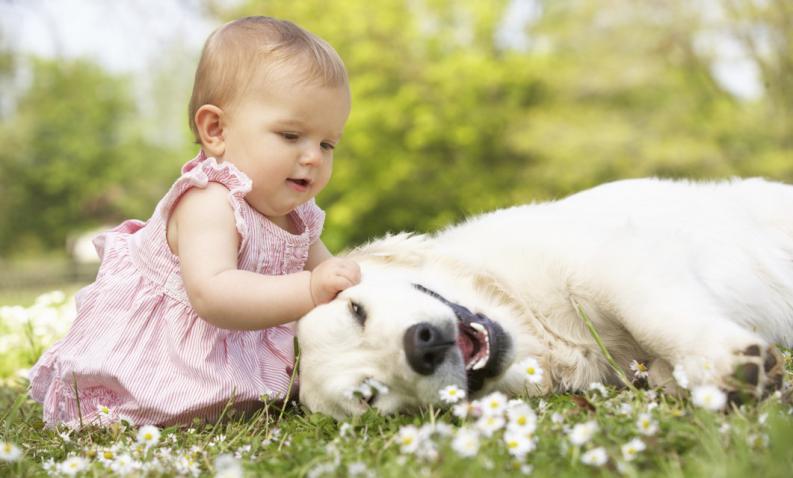
According to a recent scientific study led by Bridgett M. von Holdt, of the Department of Molecular Biology at Princeton University, this is completely true.
The research shed light on the reasons that would explain the well-known and adorable kindness of the dogs, which places them as one of the most loyal and popular pets in the world, and draws them away from their unfriendly predecessor -the wolf-, a behavioral divergence little explored to date.
According to the scientists, the pronounced sociability of dogs is due to a genetic mutation similar to that which characterizes Williams-Beuren syndrome (WBS), an uncommon human genetic disorder - it is presented, according to the calculations, in one of every 20 thousand births- which has as one of its symptoms hyperssociability.
"We found that hyperssociability, a central feature of WBS, is also a fundamental element of domestication that distinguishes dogs from wolves.
We provide evidence that structural variants in GTF2I and GTF2IRD1, genes previously implicated in the behavioral phenotype of patients with this syndrome, are also present in dogs and contribute to their extreme sociability. This finding suggests that there are common features in the genetic architecture of WBS and canine domesticity, and that directional selection (a type of natural selection) may have targeted a unique set of behavioral genes of great phenotypic effect, allowing rapid divergence behavior between dogs and wolves and facilitating their coexistence with humans ", the scientists indicate, in the article published in July 2017 in Science Advances.
Fuente: www.4patas.com.co