Caffeine is the most widely consumed stimulant worldwide. Because of this, and because it is easily digested, absorbed and metabolised, the effects of caffeine on the human body have been well studied.
Caffeine is found naturally in a variety of common foods such as coffee, tea (Camellia sinensis) and cacao beans. Natural or synthetic caffeine can be added to food products such as energy drinks, alcoholic beverages, mints, energy bars and sweets.
Myths about coffee
Coffee/ caffeine is a diuretic. Many people worry that drinking caffeine beverages will cause them to become dehydrated, but good quality evidence has found this not to be true. Caffeinated and non-caffeinated drinks are similarly hydrating.
Coffee leaches calcium from your bones. A moderate daily intake of coffee is not associated with any adverse effects on your bones or calcium balance, as long as you consume an adequate calcium intake from your diet.
Pregnant women shouldn't drink coffee. Although conclusive evidence regarding the adverse effects of caffeine consumption during pregnancy on birth outcomes is limited, there is a possible dose-dependent association between caffeine intakes and the risk of adverse birth weight-related outcomes (e.g. foetal growth retardation and small for gestational age). Thus, although caffeine does not need to be avoided completely, lower intakes are recommended.
Coffee is harmful to your brain. Some evidence suggests that excessive caffeine consumption may be associated with less cognitive decline in healthy older adults without dementia (this protective effect appears to be more pronounced in women than men).
But, what does caffeine do in the body?
The most notable effects are on the brain as it is a central nervous system (CNS) stimulant, well known for keeping the consumer awake, increasing mental alertness and cognitive functioning. It had also been documented to enhance physical performance by improving endurance and reaction time.
Caffeine is rapidly and almost completely absorbed and metabolised by the liver, reaching peak blood concentration within approximately 1–1.5 hours after consumption. Your response to caffeine however will depend on how much you usually consume (in other words, your tolerance levels) as well as your genetics.
In general, when caffeine is consumed in moderate amounts, ≤400 mg/day for a healthy adult, ≤200 mg/day during pregnancy and lactation and ≤3 mg/kg/day for children and adolescents, it does not have negative effects on overall health. This being said, if you are more sensitive to caffeine more severe side effects may be experienced at lower doses.
Too much caffeine can cause symptoms like a heart palpitations, restlessness, anxiety, stomach upset and sleeplessness. Some studies found that even one cup of coffee can increase the time it takes to fall asleep and can decrease total sleep time.
Some sensitive individuals may experience effects such as vomiting, electrolyte imbalances, arrhythmias, seizures and hallucinations. If you think you have built up a tolerance to your daily cuppa, this is entirely possible, and if you stop having it you may experience withdrawal effects such as headaches, fatigue, drowsiness, impaired concentration and mood and irritability.
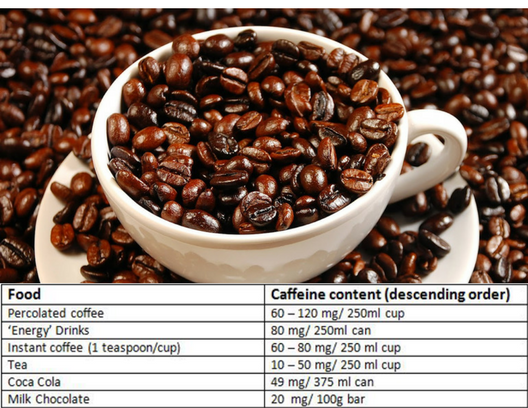
The method by which the raw ingredients are processed (roasting, grinding and brewing time) as well as the growing conditions, harvesting, plant genetics and soil quality will all affect the caffeine content of the final product. This makes it difficult to accurately label the caffeine content of food, but the approximate figures are like those in the main image of the post.
Conclusion
Go ahead and enjoy a cup of coffee, but remember that moderation is key! Non-caffeinated beverages like hot water flavoured with lemon, rooibos tea and a variety of herbal teas can help to limit your caffeine intake.
Fuente: www.health24.com