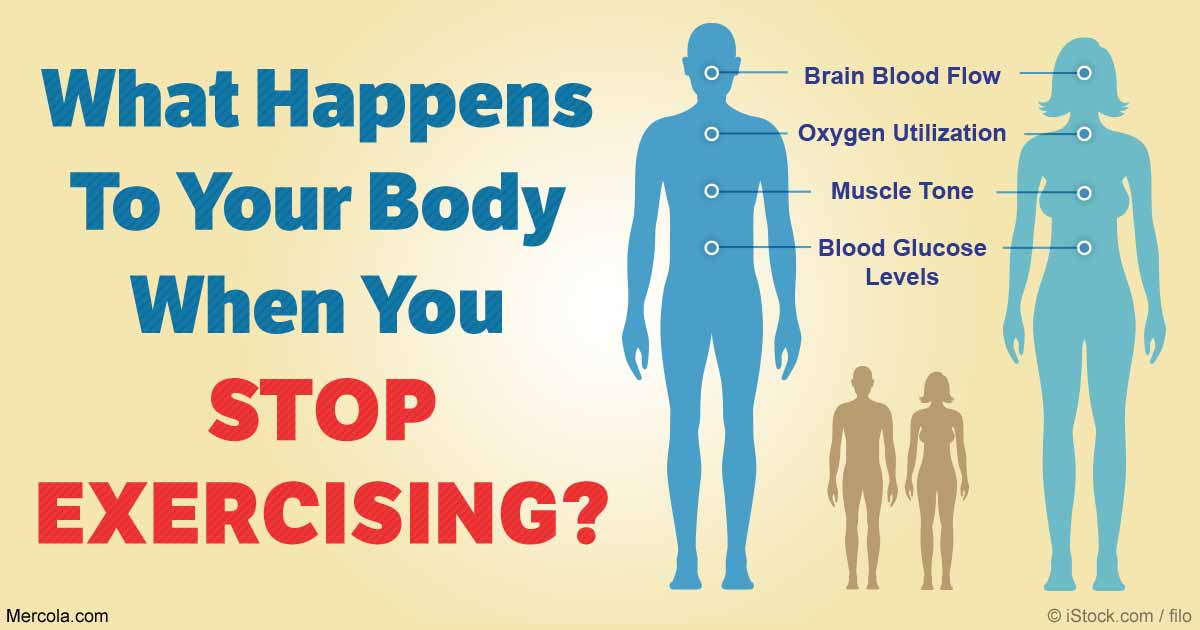
Taking a short break from exercising is ok. But when that week-long break becomes two and then three and before you know it, it’s been six months since your last workout… your body and health are in trouble.
Here’s what happens to your body when you stop exercising.
1. Your muscles
You’ll probably notice a decrease in muscle mass, which can happen in as quickly as two weeks. Your bone density, flexibility and overall blood flow also decreases.
When the muscle fibres realise they don’t need to store any more energy (because you’re not using it), they store less glycogen, which results in atrophy, or the shrinking of muscle fibres.
2. Your aerobic system and endurance
“Aerobic and endurance fitness reduce a lot faster than muscle mass – it’s the performance factor that is reduced the fastest,” Scott Weiss, a New York-based exercise physiologist and trainer, told Cassie Shortsleeve at Men’s Fitness.
He says that the amount of blood that the heart pumps to the body reduces, heart rate increases, cardiac output reduces and your VO2 max (that’s the maximum volume of oxygen your body can use) decreases by about 1% per day.
“You begin to lose endurance capability as well as the ability to perform at higher intensities,” Tom Holland, an exercise physiologist, adds in the same article.
3. Your brain
Exercise helps get oxygen to your brain, which can affect your health. Research published in the Frontier in Aging Neuroscience journal looked at endurance runners and the effect skipping exercise had on their brains.
The runners took a 10-day break from exercise – MRIs showed a reduction of blood flow to the hippocampus (the area in your brain associated with memory and emotion). The runners didn’t show any cognitive changes during this period, but the researchers pointed out that more long-term studies need to be done.
4. Your sleep
Exercise helps with good sleep. During your deep REM cycles, your body produces hormones that help repair muscle tissue damaged through exercise.
“A lack of exercise will lead to higher levels of energy in the body and reduce the need for deep sleep, which could lead to restless or insufficient sleep,” Pete McCall, an expert exercise physiologist at the American Council on Exercise, told Cassie Shortsleeve at Men’s Fitness.
5. Your mood
Exercising triggers neurotransmitters (endorphins, serotonin, dopamine), which play a role in mood control. Endorphins make you feel good, which is why you often feel better after exercising.
A 2012 study in the Neuroscience journal says that exercise is a long-term investment when it comes to increased productivity and happiness from day to day.
"Those who had exercised during the preceding month but not on the day of testing generally did better on the memory test than those who had been sedentary, but did not perform nearly as well as those who had worked out that morning,” the authors said.
When it’s ok to skip a workout
Sometimes your body needs a rest to recover. Here are times when it’s ok to slack off on exercising:
You’re sick (particularly if you have a fever or symptoms that are affecting your chest
You’ve injured yourself
You’re absolutely exhausted
You over did your previous workout and can barely walk
Fuente: www.health24.com