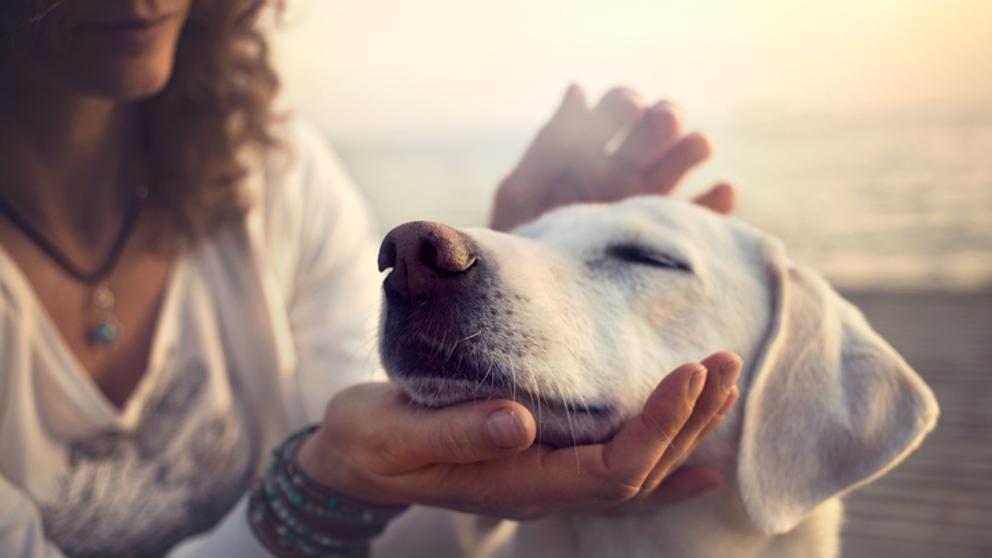
If you have ever had a dog, you probably know how much it moves us when we get home, whether we have been away for 5 minutes or 5 hours, our furry friend awaits us with excitement and joy, protects us from problems and makes faces of "give me my part, human!" every time we bring something to our mouth.
If your beloved pet often wags, jumps and gets excited when you get home, perhaps not only does it out of emotion but is communicating with you.
A recent study by the University of Portsmouth (UK) revealed that dogs produce more facial expressions when humans observe them. Scientists at the University's Dog Cognition Center were the first to discover clear evidence that dogs move their faces in direct response to human attention.
These scientists found that dogs do not respond with more facial expressions when they see tasty snacks, suggesting that these animals produce facial expressions to communicate and not just because they are excited.
"Domestic dogs are an interesting model for this type of study as they have a unique history: they have lived with humans for about 30,000 years, during which selection pressures appear to have acted upon their ability to communicate with humans" , scientists note in the work published today in the journal Scientific Reports.
Cognitive expert Juliane Kaminski led the study, where the researchers studied 24 dogs of various races, one to twelve years old.
Fuente: www.adn40.mx