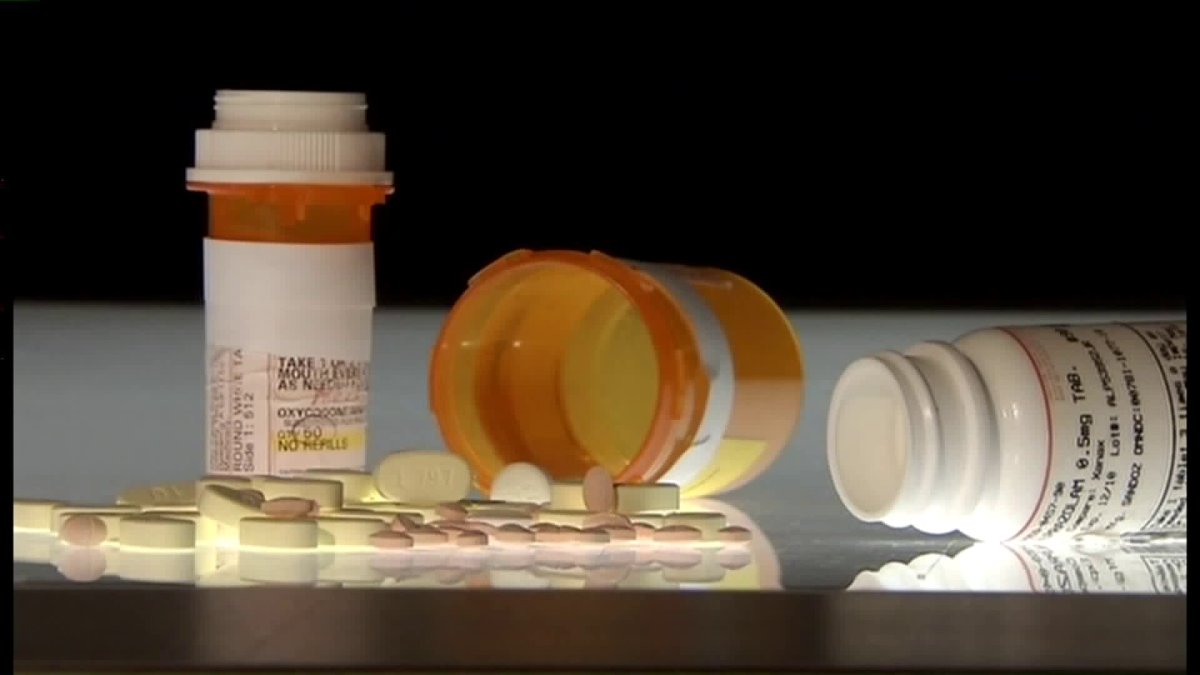
(wlrn.org) The deadline is approaching for the governor of Florida to sign a bill aimed at tracking the use of addictive prescription drugs. Some medical professionals see the measure as an important advance for the control of the same ..
Florida did not always track who dispensed prescription drugs with addiction, and who was taking them. Now, forty-nine states have some form of these prescription drug monitoring programs. Joann Richter, of Broward County, said the reform of the state system could have prevented his brother's accidental death.
“He has for many years been able to acquire prescriptions, 90 pills at a time. No monitoring of those prescriptions being written by numerous physicians and also being filled by numerous drug stores, by just going from one to another,” Richter said.
Dr. Hugh VanLandingham remembers a time before the statewide database.
“It was like the Wild West. You didn’t have any idea what you should be doing as a doctor, and what else the patients were doing with other doctors,” VanLandingham said.
But now providers must log the prescriptions they write, and who’s taking them, within seven days. Doctors and pharmacists across the state can access these records and track patient use. VanLandingham says the progress is dramatic.
“And before we were blindly prescribing, and somebody would come in and as doctors you want to help people. They’re hurting! 'Doc, my migraines are killing me' or whatever. 'Well I’ll give you a prescription and that will give you some relief at least for now.' And there was no way of monitoring or seeing that,” VanLandingham said.
This year state lawmakers voted to reform the prescription drug monitoring system. Under the proposed changes, doctors would have until the end of the next business day to log their prescriptions, instead of a week. Bill sponsor Democratic Representative Nicholas Duran says most are already following that timeline.
“We already know that 70, close to 70% of those are reporting into the system are already doing so within twenty-four hours. So for that 30% there’s a couple of things we’ve done here. One, is we have expanded out the timeframe of when this takes effect to January 1st, allowing them to work on their internal systems,” Duran said.
Lawmakers also proposed controlling the amount of pills doctors could dole out. An initial prescription would’ve been limited to a five day supply, forcing patients to come back if they needed more. That amendment ultimately failed.
Dr. Jayati Singh believes physicians shouldn’t be tied down.
“Any time you make a rule, like you can only do a three or five day supply, I think you’re going to run into trouble, because I think it’s case by case,” Singh said.
And she says between the database, and new protocols and guidance, providers are doing a better job of limiting opioids on their own.
“I think physicians are much more cognizant now. And I think they’re really doing their part about not writing opioids unless necessary. At least most of us I think are really making an effort. I do think we do need to do a better job at policing our own when they’re not,” Singh said.
According to the Florida Department of Health, overdose deaths doubled between 1999 and 2012, many of them due to prescription drugs. But ironically and tragically, Dr. Karl Hempel says there’s some evidence opioids aren’t effective for chronic pain.
“They’re not really the answer to a lot of pain, chronic pain conditions. They’re not the answer,” Hempel said. "People do better with low back pain that don’t take any medicine than people who take opioids. They get addicted to them, and they have their back pain ten years later. Versus people who don’t do anything, it goes away with normal activity.”
Earlier this spring, Governor Rick Scott declared a state of emergency over the opioid epidemic. He has until June 29th to act on the bill reforming the prescription drug monitoring program.
Fuente: wlrn.org