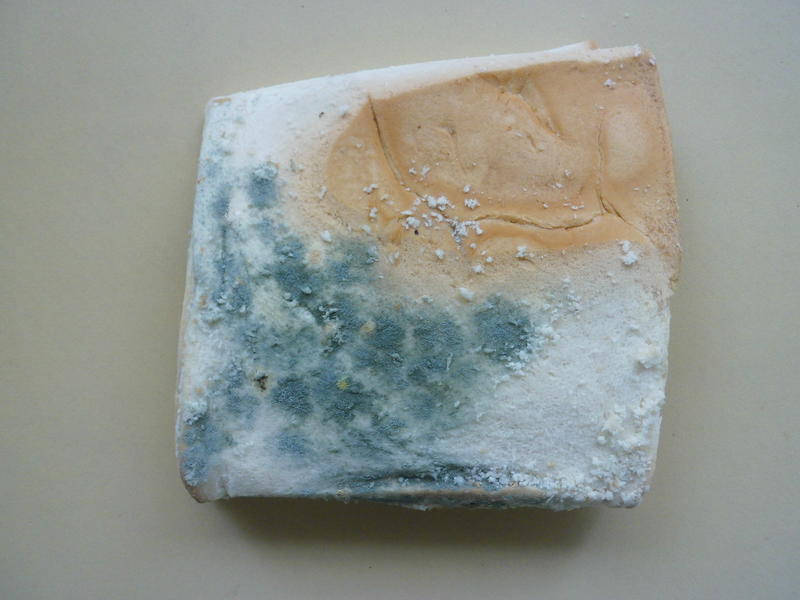
At some point or other, you may have looked in your cupboard and found unappetizing little moldy bits on your bread or hamburger buns. Like most people, your first reaction might be to throw it into the nearest garbage pail. Someone may even have admonished you, saying a few specks of mold on bread was “perfectly fine,” “nothing wrong with it,” or brought up the benefits of penicillin.
As NPR’s The Salt asks, “Is the furry green stuff a death knell for a baguette, or just a minor setback?” It turns out your initial reaction was probably the right one. Here’s the skinny: Experts on all things foodie agree that moldy bread slices should not serve as the tight ends on your sandwich. According to senior technical information specialist Marianne Gravely from the U.S. Department of Agriculture (USDA):
“We don't recommend cutting mold off of bread, because it's a soft food. With soft food, it's very easy for the roots (of the mold), or the tentacles, or whatever creepy word you want to use, to penetrate deeper into the food.”
Mold, for the record, is a type of microscopic fungi that makes its living on organic matter. By the time the lacy fingers of fungus have reached other areas of bread, it may be more than just mold. Other bacteria types may have set in, as well. A USDA food safety site says what you see may be the proverbial tip of the iceberg:
“Gray fur on forgotten bologna, fuzzy green dots on bread, white dust on Cheddar, coin-size velvety circles on fruits, and furry growth on the surface of jellies. When a food shows heavy mold growth, ‘root’ threads have invaded it deeply. In dangerous molds, poisonous substances are often contained in and around these threads. In some cases, toxins may have spread throughout the food.”
The Problem With Moldy Bread
Mold on bread is called Rhizopus nigricans. Magnified a couple dozen times, vegetative filaments called mycelium and sporangia spores are visible. The Salt adds:
“[It has] visible spores on the surface and a network of microscopic roots that twist deep below that are often invisible to the naked eye. So, a mold's penetration into a piece of bread may be greater than a quick look-over suggests.”
If you’re wondering if sliced bread might have fewer problems if just one end has detectable mold, there’s no guarantee the mold hasn’t spread; you just can’t see it. Other times you can see clearly that mold on one slice can indeed “infect” the one next to it. As tempting as it may be to save bread with just the tiniest green amoeba-looking fuzz decorating it (because you hate to throw out food), you should toss it.
People who eat moldy bread or other food can suffer from respiratory problems or have allergic reactions, and it may even be the explanation for other “mystery” illnesses. Even inhaling it (to see if it smells OK, for instance) can cause problems. In fact, its toxic potential necessitates putting it in a plastic bag and into a covered garbage can so kids or pets don’t get into it. That goes for jams, jellies and soft fruits, too. In case it’s not obvious, if lunch meat looks or smells a little “off,” pitch it.
Fuente: articles.mercola.com