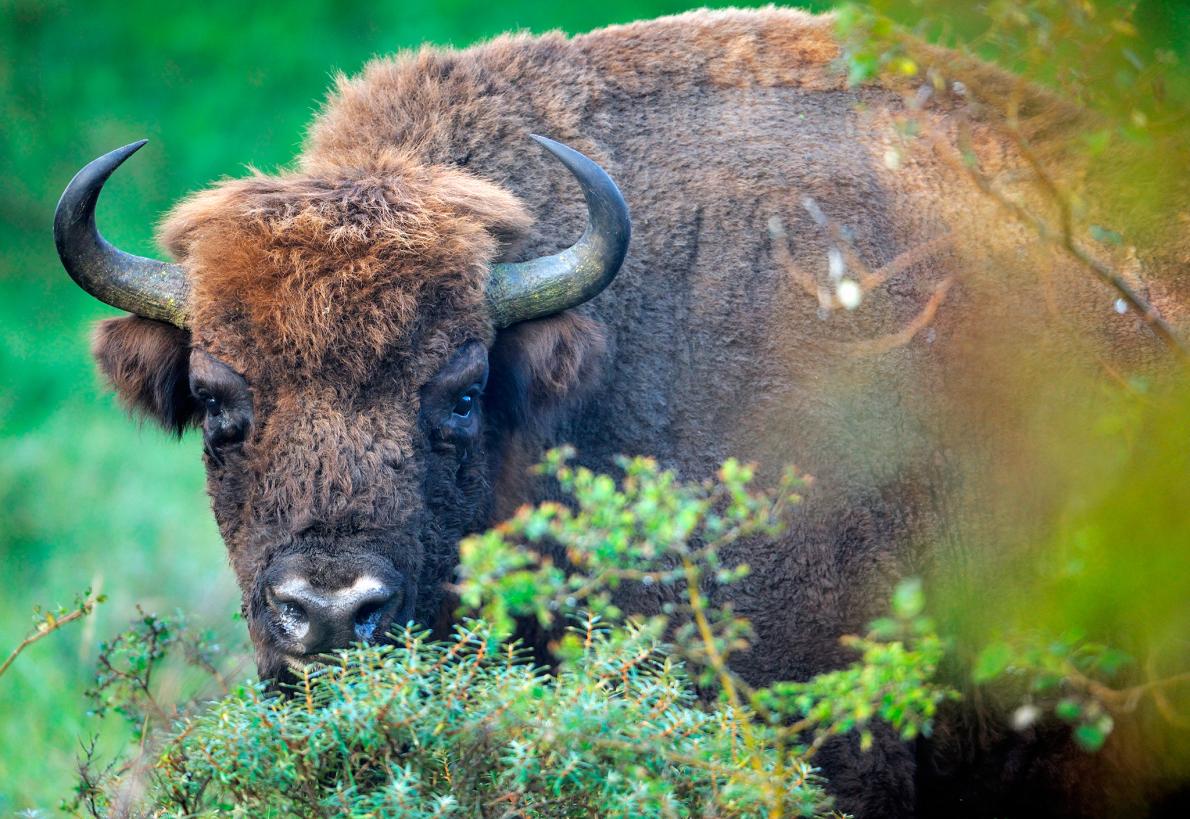
European bison went extinct in the wild in 1919, but now a few thousand are back, grazing in forests and on plains in a handful of countries. The first four of a group of 11 animals—Europe's largest living land animal—were reintroduced into state forest land in the Netherlands earlier this month.
The Dutch government hopes the carefully bred and selected animals—three bulls and eight cows—will multiply. (See photos of bison.)
Fenced inside an area about 1,500 hectares in the southeastern province of Noord-Brabant, the European bison (Bison bonasus) herd will eventually serve as a breeding stock to supply efforts to "rewild" other parts of the continent, says Frans Schepers, the managing director of the Netherlands-based nonprofit Rewilding Europe. The group oversees breeding of the bison, based on animals that lived on in zoos after they were wiped out in the wild.
This latest project marks the second reintroduction of bison into the Netherlands, with the first taking place in the Kraansvlak nature reserve in the province of Noord-Holland in 2007.
The species has been selected for such rewilding efforts because of the important role it plays in establishing the ecosystem of Europe's forests and plains, Schepers notes. (Learn more about rewilding in the U.K.)
"Rewilding is not just about putting animals back," says Schepers. "It's about allowing natural processes to take over as much as possible."
Bison serve important roles in cropping and fertilizing grasses, which then become food for deer and many other animals. Bison also serve as an important food source for wolves and other predators and for vultures when they die.
That's why Rewilding Europe and other partners have been slowly introducing bison into pockets of Europe over the past few years. Out of about 5,000 of the animals left in the continent, about 3,500 now live in wild or semi-wild places. The largest herds are in Poland and Romania, but scientists hope they can gain footholds in other areas. As of now, there are more wild black rhinos in Africa than wild bison in Europe.
Other keystone species being similarly targeted for reintroduction include beavers, which shape wetlands; red deer and wild horses, which shape forests and plains; or even extinct aurochs, the wild precursors to modern domestic cattle.
Fuente: news.nationalgeographic.com