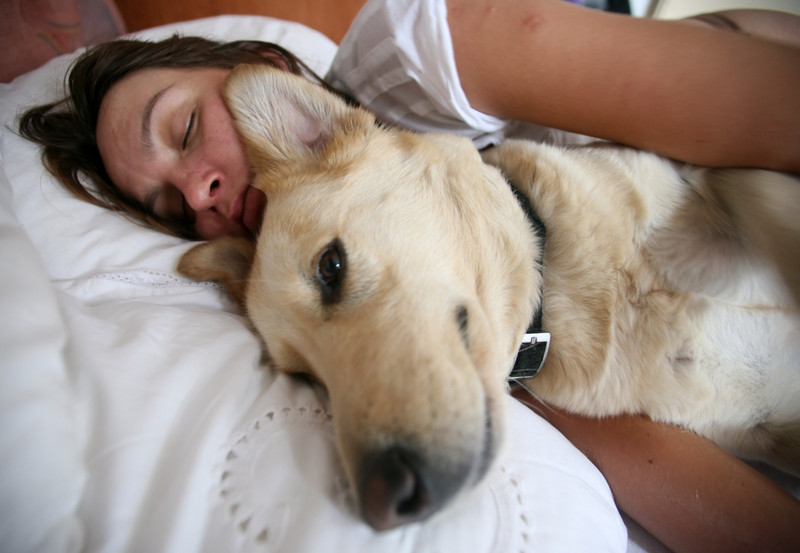
Dogs whimpering that they need to "go outside," cats with medical needs, even pets that snore -- it's all adding up to sleepless nights for many Americans, a new report finds.
Overall, the percentage of people reporting sleep-time trouble with their pets rose from 1 percent in 2002 to 10 percent by 2013, according to a small study by Mayo Clinic researchers in Phoenix.
"While the majority of patients did not view their pets intolerably disturbing their sleep, a higher percentage of patients experienced irritation [and] this may be related to the larger number of households with multiple pets," study lead author Dr. Lois Krahn, a Mayo Clinic psychiatrist, said in a clinic news release.
"One patient owned a parrot who consistently squawked at 6 a.m.," Krahn noted. "He must have thought he was a rooster."
The study, slated for presentation at this week's annual meeting of the Associated Professional Sleep Societies in Seattle, involved 110 patients treated at the Mayo Clinic Center for Sleep Medicine in Arizona between August and December 2013.
The patients answered questions about their pets and how they behaved at night. The patients also provided specific information on the number of pets they had, the types of pets they owned and where the animals slept at night.
The researchers found that 46 percent of the patients had pets. Of these people, 42 percent had more than one animal. Most of the study participants had dogs, cats or birds.
Among the pet behaviors that caused the patients to be disturbed during the night:
snoring,
whimpering,
wandering,
wanting to "go outside", and
having medical needs.
"When people have these kinds of sleep problems, sleep specialists should ask about companion animals and help patients think about ways to optimize their sleep," Krahn said.
Fuente: consumer.healthday.com