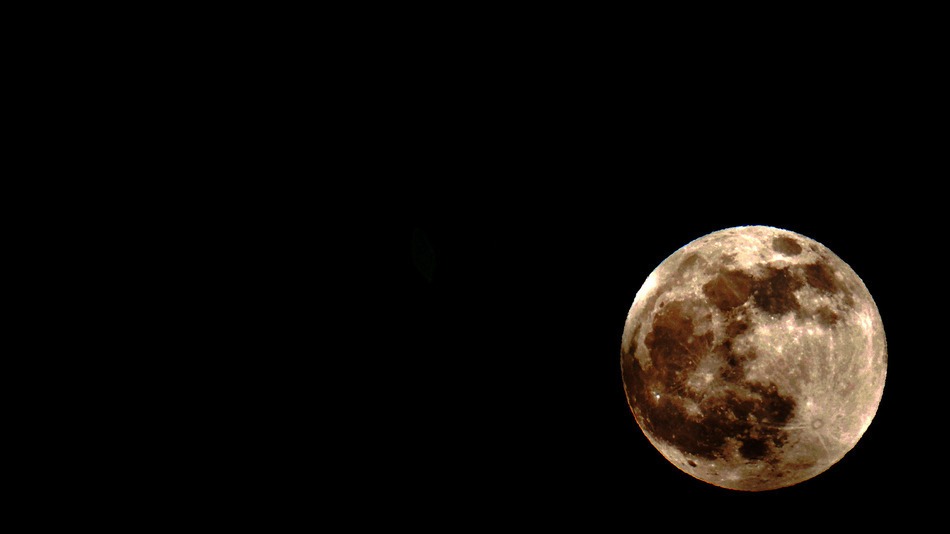
A blue moon is rising Friday, and, weather permitting, people all over the world will have a chance to see the rare lunar event.
Friday's full moon probably won't look markedly different than other full moons this year, but it will be the second full moon of July making it a rare blue moon, according to a modern definition.
The last blue moon like this one rose in 2012, and there won't be another until 2018.
A full moon is labeled a blue moon when it is the second one to happen on any given month, but it hasn't always been that way.
"If you told a person in Shakespeare's day that something happens 'once in a blue moon' they would attach no astronomical meaning to the statement," NASA said in a statement.
"Blue moon simply meant rare or absurd, like making a date for 'the Twelfth of Never.' Since then, however, its meaning has shifted."
In the 1940s, the definition of blue moon changed. The Maine Farmer's Almanac defined the astronomical event in an extremely complicated way that left scientists confused, NASA said.
A Sky & Telescope magazine story published in 1946 defined "blue moon" as the second full moon in a month, which, while not necessarily correct, was understandable, so it stuck.
The moon can occasionally take on a blueish hue. Volcanic eruptions can throw ash high up into the atmosphere, sometimes causing the moon to take on a blue pallor from various vantage points.
Forest fires can also appear to put a blue filter over the moon.
"A famous example is the giant muskeg fire of Sept. 1953 in Alberta, Canada," NASA said.
"Clouds of smoke containing micron-sized oil droplets produced lavender suns and blue moons all the way from North America to England."
Fuente: mashable.com