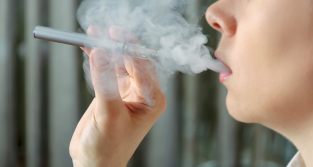
Although smoking and drinking are stable or declining among US teenagers, marijuana use has risen in past decades—particularly among black teens.
“Our analysis shows that public health campaigns are working—fewer teens are smoking cigarettes,” says Stephanie Lanza, professor of biobehavioral health, and scientific director of the Methodology Center at Penn State. “However, we were surprised to find the very clear message that kids are choosing marijuana over cigarettes.”
Lanza and colleagues analyzed data collected from US high school seniors between 1976 and 2013. Nearly 600,000 students took a survey over this time period as part of the project Monitoring the Future, a long-term ongoing epidemiological study conducted by the University of Michigan.
Lanza and her team focused on information reported about the rates of use of three different substances—alcohol, cigarettes, and marijuana—over the course of 37 years. They report their results today in the Journal of Adolescent Health.
Students were asked about their use of these three substances in the 30 days prior to taking the survey. Overall the researchers found a marked decline in cigarette use, particularly among white teens, and an increase in marijuana use, particularly among black teens.
In 1993, black adolescents were equally likely to use marijuana and cigarettes, and have continued an upward trend in marijuana use since. White adolescents were more likely to smoke cigarettes than use marijuana until 2011, when marijuana usage slightly surpassed that of cigarettes.
In 2013, nearly 19 percent of white teens smoked cigarettes, while almost 22 percent used marijuana. At the same time only about 10 percent of black teens smoked cigarettes, but nearly 25 percent used marijuana.
The rate of teen alcohol consumption has decreased since the mid-1970s, however white adolescents still drink alcohol more than they use any other substance. White teens’ alcohol use remained higher than black teens’ throughout the study period.
The paper includes line graphs tracking substance use over the past four decades.
“What will this look like in a few years?” Lanza asks, indicating the two lines representing alcohol and marijuana, respectively, on the graph showing black teens’ use. “All signs point to these two lines crossing within the next few years. This is a decisive shift.”
Students were more likely to use marijuana if they also smoked cigarettes than if they did not, and vice versa. Teens were also more likely to use marijuana if they drank excessively than if they did not, and vice versa.
The researchers intend to continue analyzing teen substance use data. They are particularly interested in looking into a potential correlation between the recent rise of adolescent marijuana use and its legalization in several states.
Additional researchers from Penn State and University of North Carolina at Chapel Hill also collaborated on this research.
Fuente: www.futurity.org