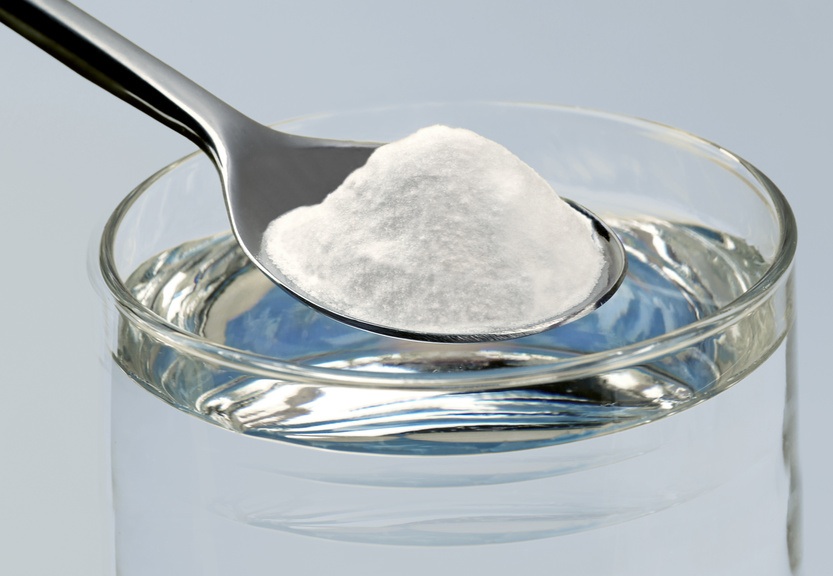
It is not every day that one’s medical work is confirmed so utterly. On January 3rd of 2013 medical scientists published vindication for Dr. Tullio Simonini and even more so for my own work, which favors oral and transdermal use of bicarbonate instead of using it intravenously. It is not only vastly less expensive to use bicarbonate (baking soda) orally and transdermally in baths, but it is safer and now proven to be effective.
I find it very gratifying to have written and published Sodium Bicarbonate – Rich Man’s Poor Man’s Cancer Treatment. It is the only complete medical review on the subject. I hope it is clear to everyone, after reading the research below from the mainstream of medical science, the importance of becoming familiar with bicarbonate medicine and what it can do for cancer, kidney and diabetic patients as well as for those seeking relief from the worst symptoms of the flu.
“The results of this study suggest that tumor cells do, indeed, perform niche engineering by creating an acidic environment that is non-toxic to the malignant cells but, through its negative effects on normal cells and tissue, promotes local invasion.”
The great advantage to using bicarbonate orally (reinforced by strong magnesium and bicarbonate baths) is that one can dose during all the waking hours and receive a full course of treatment in about ten days. Anyone can drive up their pH and saturate all their cells to a much higher extent through these methods. This is in contrast to Dr. Simoncini’s method that uses the blood for delivery and thus changing the pH is strictly limited by enforced blood parameters.
Exactly how high the pH is driven up using bicarbonate orally can be controlled simply by using pH test strips. One can do this continuously for up to ten days keeping the optimal anti-cancer pH level constant. Using sodium and potassium bicarbonates (seawater offers a parallel reinforcing treatment) involves increasing carbon dioxide levels, which increases oxygen levels as well as cell voltage—something not generally known or understood.
This is the abstract for Dr. Robert J. Gillies and team from Wayne State University School of Medicine paper, “Acidity generated by the tumor microenvironment drives local invasion.”[1]
The pH of solid tumors is acidic due to increased fermentative metabolism and poor perfusion. It has been hypothesized that acid pH promotes local invasive growth and metastasis. The hypothesis that acid mediates invasion proposes that H+ diffuses from the proximal tumor microenvironment into adjacent normal tissues where it causes tissue remodeling that permits local invasion.
In the current work, tumor invasion and peritumoral pH were monitored over time using intravital microscopy. In every case, the peritumoral pH was acidic and heterogeneous and the regions of highest tumor invasion corresponded to areas of lowest pH. Tumor invasion did not occur into regions with normal or near-normal pH. Immunohistochemical analyses revealed that cells in the invasive edges expressed the glucose transporter GLUT-1 and the sodium-hydrogen exchanger NHE-1, both of which were associated with peritumoral acidosis.
In support of the functional importance of our findings, oral administration of sodium bicarbonate was sufficient to increase peritumoral pH and inhibit tumor growth and local invasion in a preclinical model, supporting the acid-mediated invasion hypothesis.
In their discussions these researchers summarize the basic mechanisms of pH and cancer virility:
The propensity of cancers to invade adjacent normal tissues contributes significantly to local tumor growth and formation of metastases, which are largely responsible for tumor-associated morbidity and mortality. The mechanisms by which tumor cells invade are complex and can be modified in response to environmental conditions. Due to increased glucose metabolism, H+ production and excretion are generally increased in cancers. This, combined with poor perfusion, results in an acidic extracellular pH in malignant tumors (pH = 6.5-6.9) compared to normal tissue under physiologic conditions (pH = 7.2-7.4).
Cancer cells, because of their enhanced evolutionary capacity, develop adaptive mechanisms that allow them to survive and even proliferate in acidic environments. Extracellular pH of tumors is typically highly acidic, and this will inevitably result in acid diffusion into the surrounding stroma.
We propose that the acidic pH of the tumor microenvironment represents a “niche engineering” strategy that promotes local invasion and subsequent in vivo growth of malignant tumors. Support for this model has come from recent observations that neutralization of the tumor derived acid with systemic buffers (e.g. bicarbonate, imidazole, lysine), can inhibit spontaneous and experimental metastases.
[1] Acidity generated by the tumor microenvironment drives local Invasion; Veronica Estrella, Tingan Chen, Mark Lloyd, et al; Cancer Res Published OnlineFirst January 3, 2013; doi:10.1158/0008-5472.CAN-12-2796