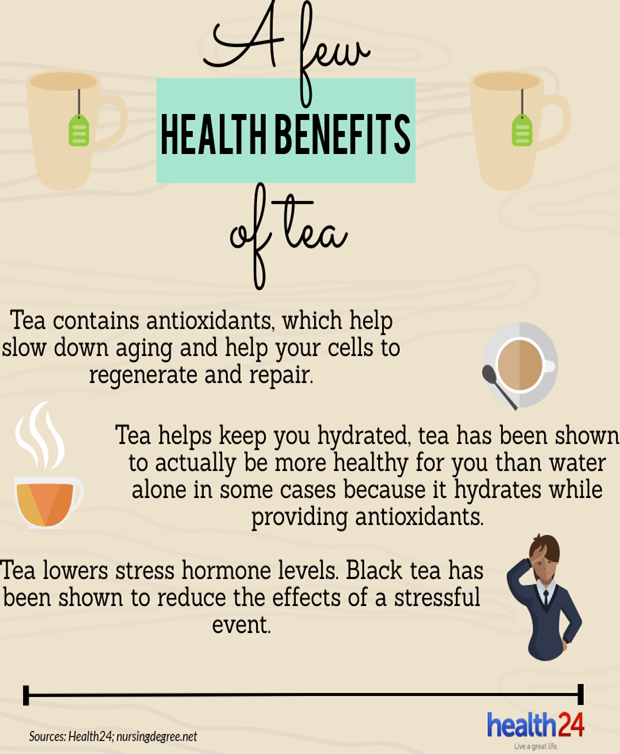
The latest study on tea as an alternative to coffee suggests at least a cup a day may help your body cling to heart-helping "good cholesterol" as you age.
Helps reduce LDL
Previous research has suggested more tea may significantly lower the risk of heart disease and stroke by reducing low-density lipoprotein, or LDL, the "bad" cholesterol that can build up in arteries.
What's uncertain is tea's effect on high-density lipoprotein, or HDL, the healthy cholesterol that helps eliminate LDL. Some studies found that tea significantly increased HDL, while others found no consequence at all.
But tea appears to slow the natural decrease in HDL that occurs during ageing, according to the new study published June 25 in the Journal of the American Heart Association.
'Green tea had a slightly stronger effect than black tea'
The study monitored more than 80 000 people from the Kailuan community of Tangshan, China, over a six-year period. It found regular tea drinkers had a slower age-related decrease in HDL levels. That decline was linked to an eventual 8% decrease in cardiovascular risk among those in the study.
Green tea had a slightly stronger effect than black tea, but both are full of polyphenols and catechins, two antioxidant compounds recognised for their anti-inflammatory properties. The researchers did not collect data on coffee, which is not popular in that area of China.
The link between greater tea consumption and slower HDL decreases appeared most pronounced in men and in people age 60 and older who typically had higher heart disease risk factors such as tobacco use, larger body mass index and low physical activity levels.
"We still observed a significant association in these people, which suggests that the observed association cannot be totally interpreted by someone's overall healthy lifestyle," said Dr Xiang Gao, the senior author of the study's report and director of the Nutritional Epidemiology Lab at Pennsylvania State University.
Credits: health.24.com
Fuente: www.health24.com