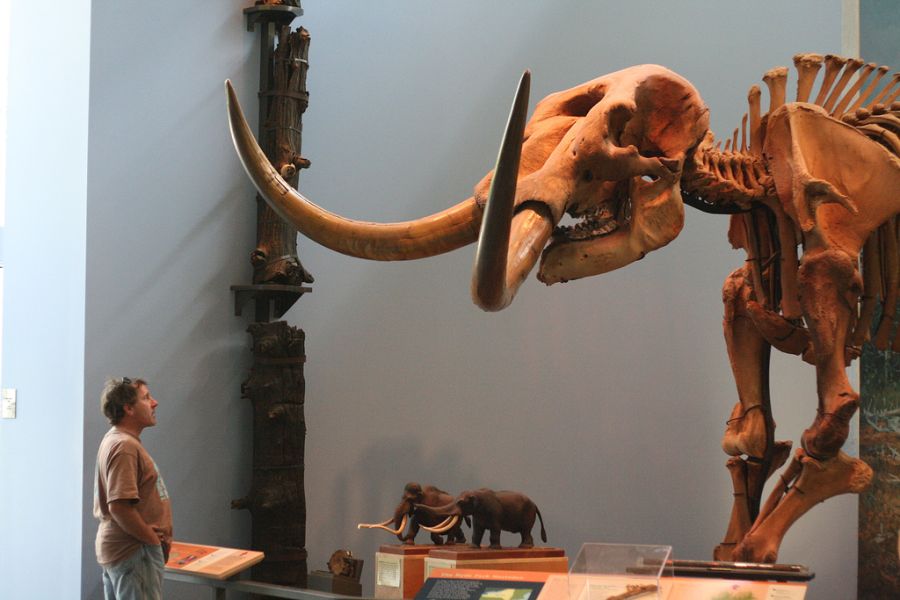
Previously the territory of sci-fi movies like Jurassic Park, scientists have actually been able to seriously contemplate the resurrection of ancient species of animals. The debate became especially relevant when some very well-preserved DNA samples of the prehistoric woolly mammoth were discovered: one 45,000-year-old sample coming from northeastern Siberia and the second from Russia’s Wrangel Island, around 4,300 years old.
It seems like this history-changing scientific technology might be real, very soon – an international team of scientists from Harvard University, the Swedish Museum of Natural History and Stockholm University have already been able to successfully sequence the complete genomes of these two Siberian woolly mammoths.
“This discovery means that recreating extinct species is a much more real possibility, one we could in theory realize within decades,” says the author of the pertinent study (published in Current Biology), Hendrik Poinar.
While the idea of resurrecting extinct ancient animals is novel and fascinating, researchers stress that this is definitely not their goal. “It seems to me that trying this out might lead to suffering for female elephants and that would not be ethically justifiable,” said lead researcher Dr. Love Dalén. Rather, the scientists involved in the project would like to study more about the extinct animal and perhaps figure out what brought about its demise on planet earth.
To this end, the research team pieced together the found fragments of mammoth DNA until they could decipher a nearly-complete genome. They were able to learn several details of these animals’ existence.
“The dates on these current samples suggest that when Egyptians were building pyramids, there were still mammoths living on these islands,” said Poinar. “Having this quality of data can help with our understanding of the evolutionary dynamics of elephants in general and possible efforts at de-extinction.”
Fuente: sharethe.buzz